Morocco Desert Tours: Costs, What to Wear, and Planning Guide
Nobody warns you about the silence. You spend nine hours bouncing over the High Atlas in a minivan, dodging stray goats and roadside melon stalls, and then the asphalt simply ends. Suddenly, you step out into the rust-red dunes of Erg Chebbi, and the silence hits your ears like physical pressure. It feels ancient and slightly intimidating. Planning a trip out here can feel confusing because online operators throw dozens of nearly identical itineraries at you. If you are sorting through the endless options for morocco desert tours, you quickly realize prices range from pocket change to small fortunes, and everyone promises the "authentic nomad experience."
The reality is more grounded, messy, and wonderful. Some camps have flush toilets, while others give you a bucket and a shovel behind a tamarisk bush. The drive is exhausting, your back will hurt from the camel saddle, and fine orange dust will somehow penetrate your zipped luggage. Still, watching the Milky Way wheel overhead while local Berber musicians play drums around an acacia fire is worth every kilometer of switchback mountain road. Here is what you need to know about costs, packing, dune selection, and surviving the long haul into the Moroccan Sahara.
Book your sahara desert tours experience:
Choosing Your Dunes: Merzouga, Zagora, or Erg Chigaga?
People often ask if there is Sahara desert in Morocco, or where the sand dunes actually start. Yes, the Sahara desert is in Morocco, running along the eastern and southern edges bordering Algeria. You do not just land in Marrakech and walk into giant orange dunes, though. The desert landscape shifts from rocky plains to jagged plateaus before reaching the actual sand seas, known locally as ergs. The three primary destinations offer vastly different experiences, and picking the wrong one is the most common mistake first-timers make.
Zagora sits closest to Marrakech. Tour agencies heavily push two-day trips there because it sounds manageable on paper. Honestly, skip Zagora if you want towering cinematic dunes. It is a stony desert plateau, known as a reg, dotted with flat scrub and a few low sandbanks. It works if you have strictly 48 hours to spare and want a quick night under the stars, but it is not the postcard Sahara you picture. If you want proper sand dunes, you need to commit to Merzouga desert tours or push south toward M'Hamid.
Erg Chebbi at Merzouga features dunes rising up to 150 meters high. It is easily accessible by standard vehicle right up to the edge of the dune line, which means it has the most developed camp infrastructure. Erg Chigaga, lying beyond M'Hamid, is wilder and harder to reach. Getting to Chigaga requires at least two hours of rough off-road driving in a four-wheel-drive vehicle across dried lakebeds. It feels lonely, untamed, and remote. If you hate crowds and do not mind roughing it, Chigaga wins. If you want hot water and a smooth route, Chebbi is your spot.
Note: Flash flooding occasionally cuts off desert roads near Merzouga during rare autumn storms. Always check local route conditions with your driver if traveling in September or October.
What to Wear on Sahara Desert Tour: Surviving the Shift
Temperature swings out here are brutal. In spring and autumn, daytime temperatures hover around 28 degrees Celsius, but the moment the sun dips below the dune crest, the sand radiates its heat away within 30 minutes. By midnight, you will want heavy wool. In winter, overnight temperatures easily dip to 2 degrees Celsius, and most standard nomad tents do not have heaters.
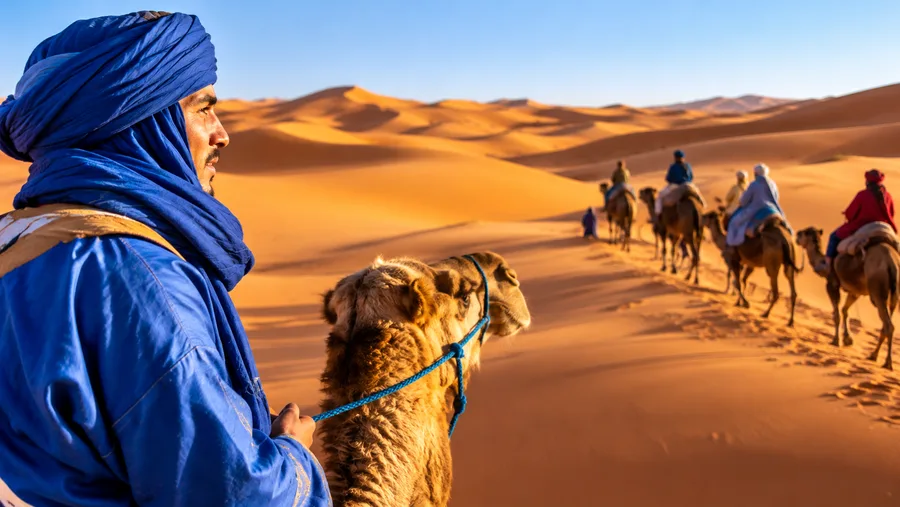
Loose, breathable fabrics are your best defense against both fierce midday sun and blowing grit. Linen trousers, long-sleeve cotton shirts, and slip-on boots are ideal. Avoid tight synthetic sportswear; it traps sweat and chafes miserably against coarse camel hair. You also need a proper head covering. A traditional Berber cheche, which is a long cotton scarf wrapped tightly around your nose, mouth, and hair, beats any baseball cap or sun hat by a mile when the wind kicks up.
Pro tip: Buy a four-meter cotton tagelmust scarf in Ouarzazate or Tinghir for roughly 60 dirhams before reaching the dunes, and let your camel driver show you how to tie it.
Packing properly makes the difference between enjoying the dunes and shivering inside a dusty blanket. Here is what should sit in your daypack:
- Sturdy slip-on shoes: Chelsea boots or closed trail shoes work best because fine sand instantly clogs running mesh.
- Merino wool base layer: Essential for sleeping between November and March when desert camps get freezing cold.
- Eyewear with side coverage: Basic sunglasses let blowing sand whip right into your tear ducts during windy camel rides.
- Dark or earthy colors: The orange iron-rich sand permanently stains white shirts and light canvas shoes.
- Hydrating face balm: Desert air pulls moisture out of your skin faster than you can drink bottled water.
Morocco Sahara Desert Tour Price: What Things Actually Cost
Pricing for a morocco desert tour can feel slippery. You will see three-day budget tours advertised in Marrakech medina alleys for 900 dirhams (around $90), alongside private boutique outfits charging $1,200 for two people. Both visit the exact same dunes, but the experience between them is night and day. The ultra-cheap tours pack 17 travelers into a cramped Mercedes Sprinter van, stop at overpriced tourist-trap restaurants where tagines cost double the normal rate, and deposit you at crowded basic camps with communal trench latrines.
Private tours cost significantly more, but they give you control over the pace. You can pull over to photograph scenic valleys, skip the tedious rug-selling co-ops, and sleep in camps with raised beds, private chemical toilets, and pressurized hot showers. Mid-range shared tours split the difference quite well if you find a reputable agency with max group caps of six people.
| Tour Category | Typical Group Size | Average Cost per Person | Camp Facilities |
|---|---|---|---|
| Budget Shared Bus | 14 - 17 travelers | $95 - $140 | Shared latrines, wool blankets, cold water |
| Mid-Range Small Group | 4 - 8 travelers | $280 - $420 | En-suite tent, hot water, proper beds |
| Private Standard | 2 travelers (exclusive) | $450 - $650 | En-suite tent, custom route, flexible stops |
| Luxury Glamping Private | 2 travelers (exclusive) | $800 - $1,400 | King beds, heating/AC, gourmet dining, electricity |
Expect minor extra expenses along the trail. Lunches are rarely covered in package prices, so budget 80 to 120 dirhams per day for roadside tagines. Tips for your driver running a multi-day route should land around 150 to 200 dirhams per day from the group, and camel guides usually receive 50 dirhams per traveler for leading the trek into camp.
Book your sahara desert tours experience:
The Road to the Dunes: Logistics and Drive Times
The biggest shock for most people is how long it takes to reach the sand. Looking at a map of Morocco, the distance from Marrakech to Merzouga seems like an afternoon hop. It is not. You have to cross the High Atlas Mountains via the Tizi n'Tichka pass, a twisting ribbon of blacktop that rises over 2,200 meters. The total one-way drive to Erg Chebbi spans roughly 560 kilometers, taking around nine to ten hours of actual driving time without stops. Doing this in a single day is pure punishment.
Most travelers choose a three-day Marrakech to Sahara desert tour, which breaks the trek into manageable chunks. On night one, you stop in the Dades Valley or Skoura oasis, seeing the mud-brick ksar of Ait Benhaddou along the way. That cuts the driving into two five-hour legs. If you have four days, take them. An extra night allows you to explore the Todra Gorge without checking your watch or feeling like you spent your entire Moroccan holiday trapped behind a bus windshield.
Motion sickness is a genuine issue through the mountain curves. If winding mountain passes make your stomach churn, pack dimenhydrinate tablets and keep them inside your pocket rather than stowed in the vehicle trunk. Once past Ouarzazate, the terrain opens into wide, arid valleys where the driving becomes smooth and straight.
Camp Life and What Actually Happens in the Desert
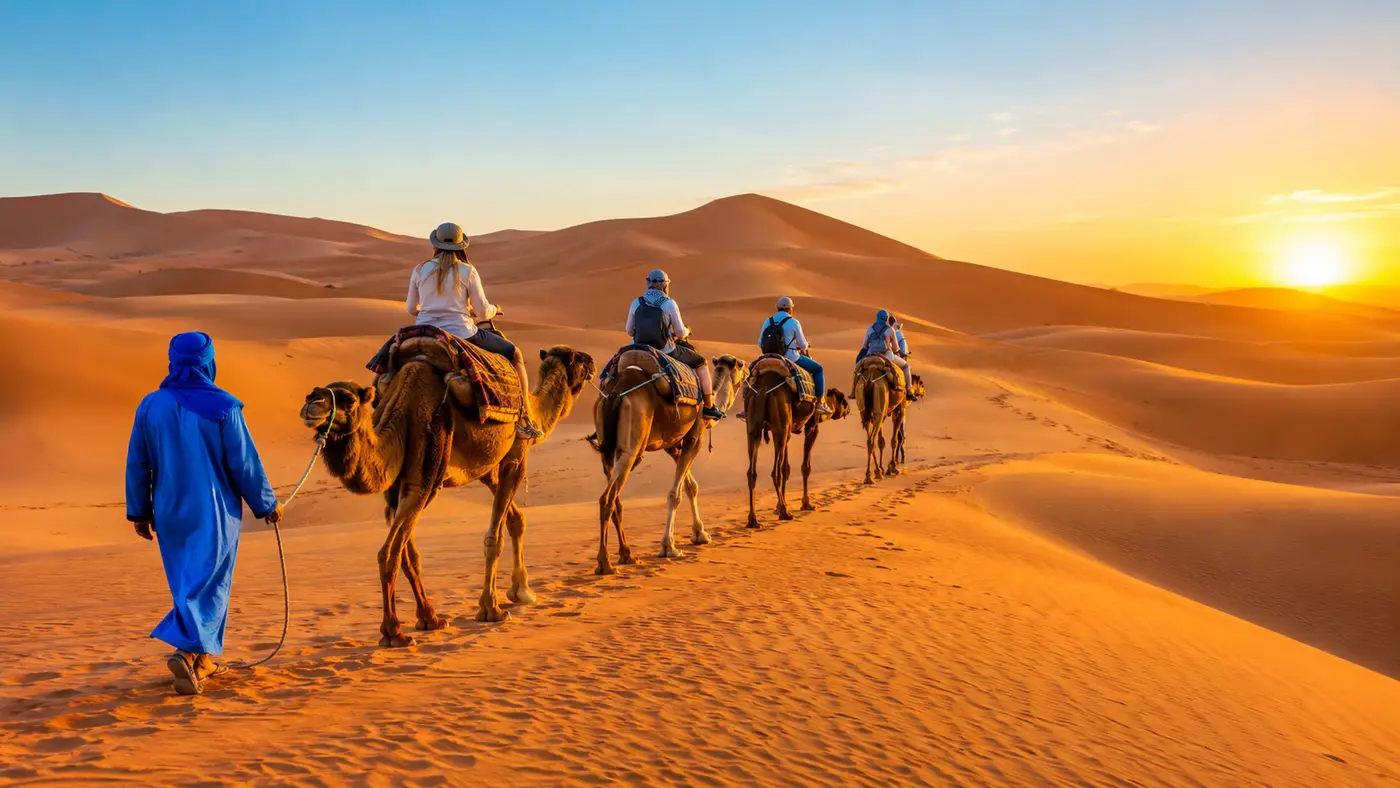
The standard afternoon starts around 4:30 PM at the desert edge. You leave your main luggage inside the support vehicle or roadside base hotel, pack a small overnight rucksack, and climb onto a camel. Riding a camel is funny for five minutes, awkward for fifteen, and slightly painful after forty. Camels have a rhythmic, rocking gait that works your inner thighs and lower back in ways you did not anticipate. When the camel stands up or kneels down, lean back hard to avoid pitching forward over its neck.
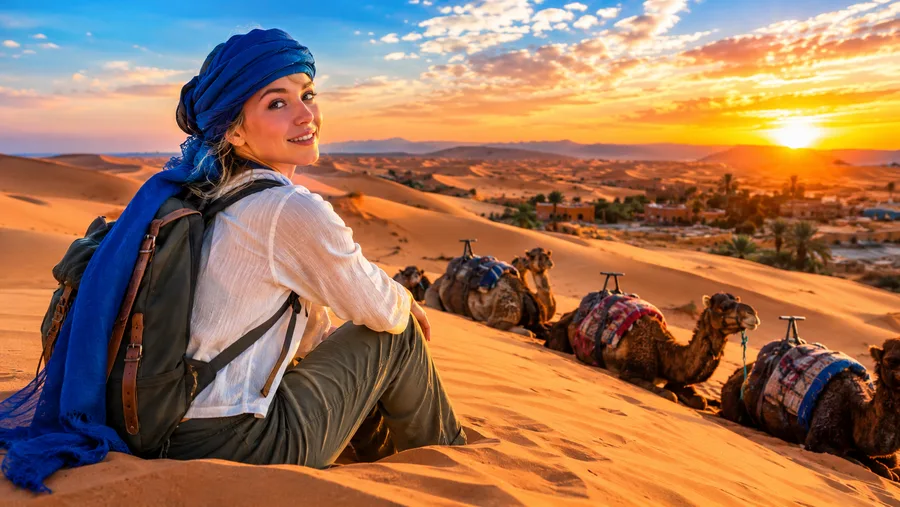
Arriving in camp just as the sun sets is pure magic. The sand turns deep copper, then magenta, then dark indigo. Dinner is almost always chicken or beef tagine with prunes, accompanied by round rounds of crusty Moroccan bread and sweet mint tea poured from high above the glass to make it foam. After eating, camp hosts usually light a fire in the center courtyard, pulling out round frame drums called bendirs.
Electricity in traditional camps runs off small solar panels, which means lights turn off around 10:30 PM. Use this to your advantage. Step away from the tents, walk fifty paces out into the dark sand, and look up. With zero light pollution for hundreds of kilometers, the stars look three-dimensional. Keep these practical items right at the top of your pack:
- High-capacity power bank: Cold desert nights drain smartphone batteries twice as fast as normal.
- Saline nasal spray and eye drops: Bone-dry air and micro-particles of sand irritate sinuses immediately.
- Biodegradable wet wipes: Water pressure drops frequently in desert camps, making quick sponge baths essential.
- LED headlamp with red light mode: Red light preserves night vision while you navigate between tents without waking neighbors.
Frequently Asked Questions about morocco desert tours
Is the Sahara desert in Morocco safe to visit?
Yes, the tourist routes through Erg Chebbi and Erg Chigaga are very safe. Morocco maintains tight security near border zones, and licensed drivers navigate these roads daily without incident.
Can you do a Sahara desert tour from Marrakech in two days?
Only to Zagora, which is a flat stone desert, not deep sand dunes. Reaching the towering sand dunes of Merzouga takes a minimum of three days due to mountain crossing logistics.
Are there bathrooms in the desert camps?
Budget camps share a communal bath block with basic running water or pit toilets. Mid-range and luxury camps provide private en-suite flush toilets and hot showers inside your tent.
Quick Reference
- Driving time: 9 to 10 hours from Marrakech to Merzouga
- Dune heights: Erg Chebbi dunes reach up to 150 meters
- Night temperatures: drops below 4°C from Dec to Feb
- Peak season: October, November, March, and April
Book your sahara desert tours experience:
The Bottom Line
A journey into the Moroccan sands takes effort, patience, and several long hours staring out vehicle windows at cracked riverbeds. It is dusty, physically tiring, and occasionally chaotic. Yet standing on a towering sand ridge at first light, watching the shadow line shift across an ocean of orange earth, resets your brain in a way few other trips can match. Pick Erg Chebbi for comfort or Erg Chigaga for isolation, avoid the cheapest bottom-tier tours, pack plenty of warm layers, and let the vast quiet of the Sahara do the rest.
Read more about sahara desert tours.