Merzouga Desert Tours: Erg Chebbi Dunes and Travel Guide
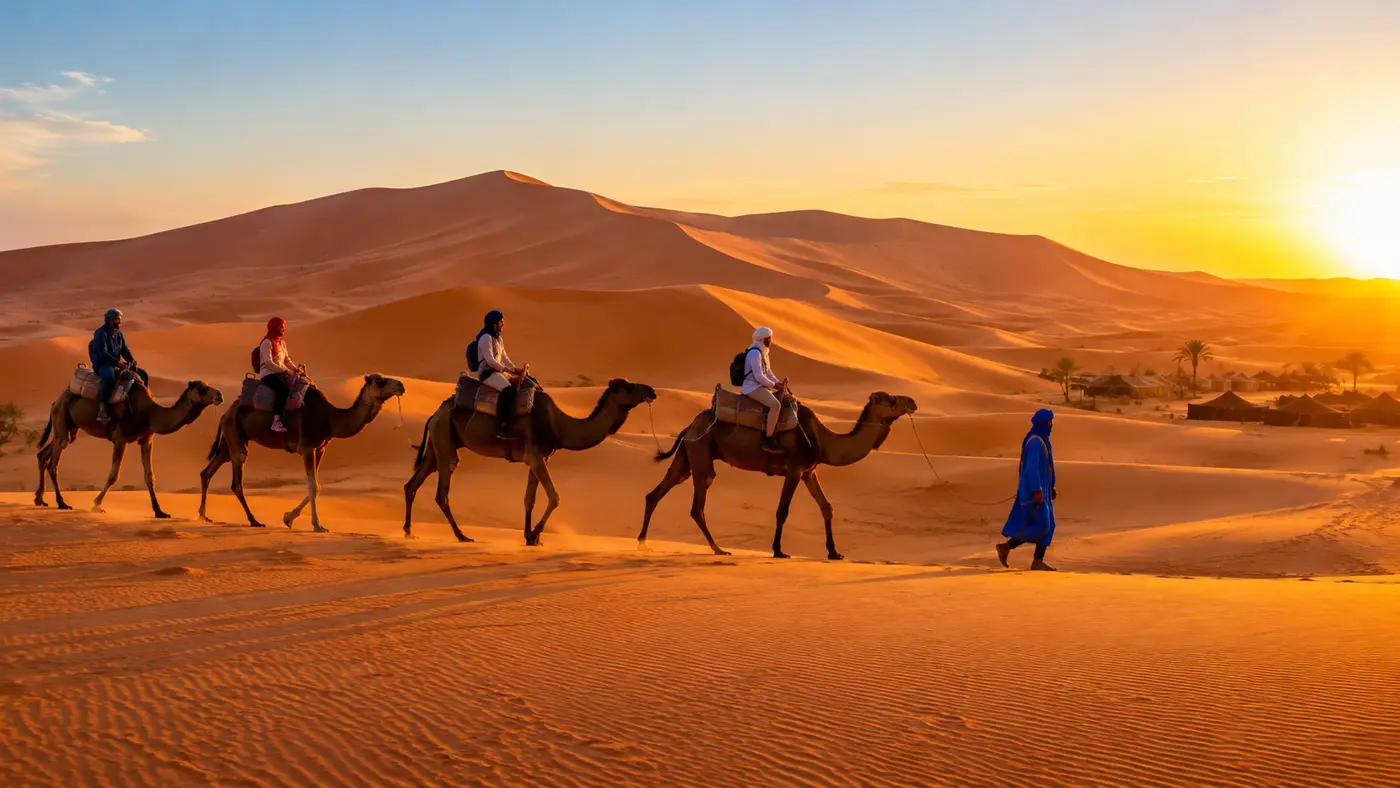
The asphalt runs out just past the edge of the village, crumbling directly into orange dirt. Step out of the van and the silence hits your ears like physical pressure, broken only by wind scraping over gravel. Most travelers land here after booking merzouga desert tours expecting a quick camel selfie for social media, but Erg Chebbi operates on its own strange, slow frequency. The massive apricot-colored ridges rise 150 meters straight out of flat black stone plains, looking completely out of place against the jagged horizon.
Planning a trip out here takes more forethought than most people realize. The Sahara is unforgiving if you pack wrong or pick the wrong season, and the sheer transit time from the northern imperial cities surprises almost everyone. This guide breaks down what actually happens out in the sands, how the camp setups work, and how to avoid the common logistical headaches so you can spend your time watching the dunes shift color at twilight.
Book your sahara desert tours experience:
What to Expect on a Merzouga Sahara Desert Tour
Erg Chebbi is roughly 28 kilometers long and about 7 kilometers wide. It looks like an ocean of sand frozen mid-storm. The light changes every twenty minutes. At midday the dunes look flat and bleached yellow under the blinding sun, but around 5:30 in the evening the shadows stretch out into deep violet hollows and the crests turn fiery orange. Walking up the slip face of a dune will leave you gasping. For every two paces you push up, your boots slide back one pace down into the soft powder. It took us about 35 minutes of grueling climbing just to reach the top ridge behind our bivouac, but sitting up there with the cold evening breeze hitting your face makes you forget your burning calves.
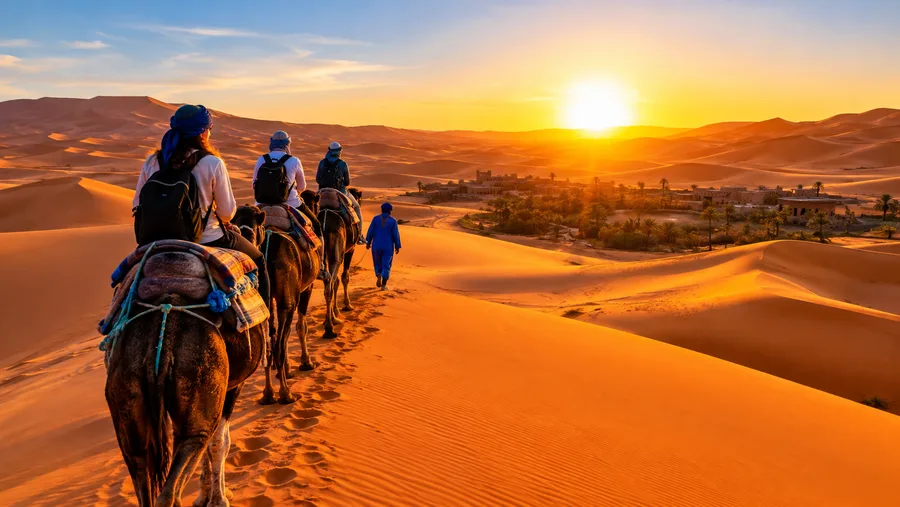
Life in the desert merzouga camps revolves around simple routines. Most groups arrive by late afternoon, either rocking atop a dromedary or bouncing across the dry riverbeds in an old Land Cruiser. Evenings mean communal tagines cooked over butane rings, sweet mint tea poured from high above the glass, and local Berber musicians drumming around a wood fire. The drums echo off the sand walls in a way that feels ancient. Once the musicians pack up their instruments, you step twenty paces away from camp and look up. There is zero light pollution out here. You can pick out the Milky Way with your naked eyes without squinting.
Waking up out here is cold. The desert loses all its daytime heat into the open sky the second the sun slips below the horizon. In December or January, morning temperatures often hover right around 3°C. You drag yourself out from under three heavy wool blankets, pull on a woolen beanie, and stumble out into the predawn dusk to catch the sunrise. The east side of each dune catches gold light while the western side stays in dark shadow, creating razor-sharp contrasts across the entire landscape.
Note: Fine desert sand penetrates phone charging ports and camera zoom rings within seconds during a breeze; keep your gear wrapped inside sealed zip-top freezer bags whenever you are not taking photos.
Getting to Merzouga Maroc and Route Options
Reaching this corner of southeastern Morocco is an endurance test. The village sits right near the Algerian border, cut off from the main metropolitan hubs by the High Atlas mountain range. If you leave from Marrakech, you face an 560-kilometer haul over the Tizi n'Tichka pass. Trying to cover that distance in a single day is pure exhaustion, which is why a multi-day route like the classic 3-day tour from Marrakech breaks the journey into manageable chunks with an overnight stay in the Dades Valley or Ouarzazate.
Coming from Fes is slightly shorter in distance, roughly 470 kilometers, but it still takes about 8 or 9 hours. You wind through the cedar forests of Azrou, past Barbary macaques begging for peanuts on the roadside, and then follow the lush date-palm ribbon of the Ziz Valley gorge before the landscape flattens into scrub desert around Erfoud. Hiring a private driver allows you to stop whenever your legs cramp up, while budget travelers rely on the daily Supratours public bus that rolls all the way from Fes down to Merzouga maroc overnight.
Self-driving in a rental car is totally feasible now because the two-lane road is paved all the way into the village center. You do not need a four-wheel drive unless you plan to drive off-road into the sand dunes yourself, which is generally a bad idea if you lack desert recovery gear and know-how. Most road trippers park their rental at an auberge on the edge of the tarmac, where their camp hosts meet them to handle the sand crossing.
| Route Origin | Transit Time | Key Scenic Stops | Road Quality |
|---|---|---|---|
| Marrakech | 9 - 10 hours | Ait Benhaddou, Dades Gorge, Todra Gorge | Winding mountain passes, fully paved |
| Fes | 8 - 9 hours | Ifrane, Midelt, Ziz Valley Palm Oasis | Paved highway, occasional slow trucks |
| Ouarzazate | 5 - 6 hours | Skoura Oasis, Tinghir, Rissani souk | Flat desert roads, easy driving |
| Er-Rachidia Airport | 2 hours | Aoufous view, Erfoud fossil workshops | Smooth, fast regional tarmac |
Camp Styles on a Merzouga Desert Tour
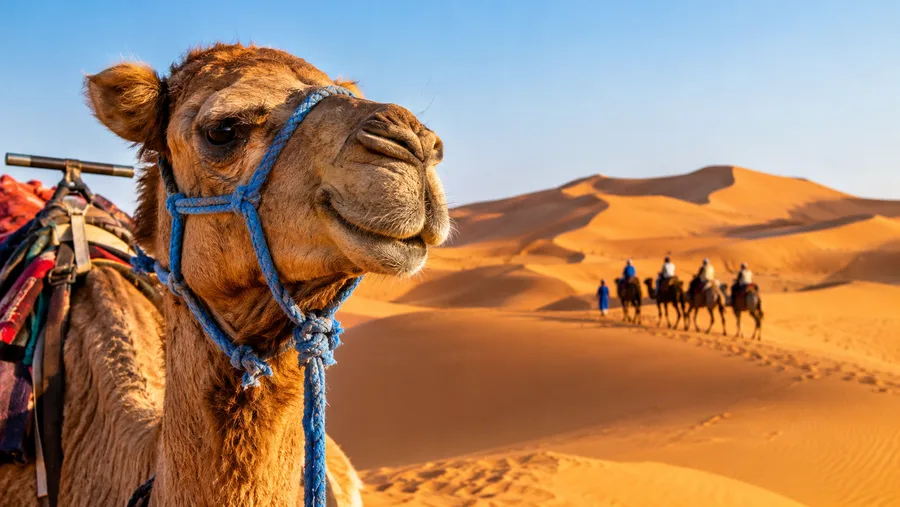
Desert accommodations fall into two distinct worlds. Basic traditional camps cater to backpackers and large bus tours. These consist of black goat-hair tents arranged in a square around an open courtyard with shared drop toilets located in a concrete block a short walk away. The beds are firm mattresses set directly on rugs over the sand. You get plenty of heavy blankets, but there is no climate control and electricity is limited to a couple of solar bulbs that dim out around 10:30 PM. It is rustic, noisy, and social.
Luxury glamping sites, on the other hand, look like boutique hotel rooms dropped onto the sand. These canvas suites feature kingsize beds with white linens, electrical outlets to charge camera batteries, private chemical flush toilets, and hot water showers fed by small gas heaters. Opting for a private camel trek through the Erg Chebbi dunes with a high-end camp means you get private dining tables on the dunes and wine service if you bring your own bottles from the supermarket in Ouarzazate.
Honestly, where your camp sits matters far more than the thread count of your sheets. The northern end of Erg Chebbi, near Hassilabied, tends to be quieter. The southern sector closest to Merzouga proper can get busy in high season, with the hum of quad bikes and 4x4 engines drifting across the ridges until dusk. When booking sahara desert tours merzouga operators run, ask specifically if their camp sits behind the primary dunes where the village lights are completely blocked out.
Pro tip: Ask your camp staff for an extra camel-wool blanket before sitting down to dinner, because once the camp generator shuts off for the night, tracking down blankets in pitch black sand is frustrating and nighttime temperatures plunge quickly.
Book your sahara desert tours experience:
Activities Beyond the Dunes on Merzouga Desert Trips
Most travelers arrive, sleep in a tent, and head out the next morning. That is a mistake. Spending two nights gives you an entire day to explore the weird borderland culture around the sands without rushing. The flat reg gravel plains surrounding Erg Chebbi hold centuries of history, from abandoned French colonial military outposts to mineral mines that supplied eyeliner to ancient caravans.
The local music scene alone justifies an extra afternoon. Just south of Merzouga sits Khamlia, a small village populated primarily by the descendants of enslaved sub-Saharan Africans who traveled the salt trade routes centuries ago. Their spiritual music, known as Gnawa, uses cast iron castanets called qraqeb and a three-stringed goatskin lute called a guembri. The rhythms are repetitive, hypnotic, and loud enough to rattle your chest bones. You sit on cushions, drink sweet tea, and listen while the musicians spin in dizzying circles.
- Gnawa performances in Khamlia: 15 minutes south of the main strip, performances are free but you should leave a cash tip of roughly 50 to 100 MAD in their basket.
- Sandboarding the high ridges: most camps have beat-up snowboards leaning against the kitchen tent; rub a candle over the base to slide over dry sand.
- Dayet Srji seasonal lake: from November through March, winter rainwater collects on the west side of the dunes, drawing thousands of pink flamingos and wading birds.
- Mifis lead mines: an eerie, wind-blasted site on the southern plateau where locals still dig galena and kohl from open pits using hand picks.
- Rissani souk days: located 35 kilometers north, this market bustles on Tuesdays, Thursdays, and Sundays with date merchants and livestock traders.
Motorized sports have taken over large sections of the outskirts. You will hear quad bikes buzzing in the afternoon. If you decide to rent an ATV or take a 4x4 dune-bashing excursion, choose an outfit that stays away from the walking trails and nomadic grazing areas. The tracks left by heavy tires take months of wind to smooth out, and the noise disturbs the camels tied up near the camp perimeters.
Practical Planning for Morocco Desert Tours Merzouga
Timing your trip makes the difference between an unforgettable memory and miserable heat exhaustion. July and August are brutal. Temperatures routinely push past 45°C by noon, turning the sand into hot coals that can melt cheap shoe glue. The wind during summer also kicks up violent sandstorms called siroccos that shut down roads and force you to stay locked inside air-conditioned hotel rooms. Winter offers crisp, clear days with highs around 18°C, though you must prepare for near-freezing nights. October, November, March, and April are the sweet spots for mild sunshine.
Cash is non-negotiable out here. There are two automated teller machines in Merzouga village, but they frequently run out of bills or reject foreign Visa cards when the regional satellite connection drops. Stock up on Moroccan dirhams in larger towns like Tinghir or Er-Rachidia before you turn onto the final desert highway. Camel drivers, camp cooks, and local musicians work hard in difficult conditions, and tips make up the bulk of their actual earnings.
- Cash reserves: carry at least 1,000 MAD per person in small denominations for tips, drinks, market snacks, and local craft shopping.
- Clothing layers: lightweight linen shirts work best for the afternoon sun, paired with a fleece jacket and windbreaker for early morning walks.
- Headlamp with red light mode: white light blinds everyone around the camp circle and ruins your night vision when stargazing on the dunes.
- Cotton tagelmust (desert scarf): buy a authentic four-meter indigo or cotton scarf from a town shop; wrapped properly, it protects ears and mouth from blowing sand.
- Wet wipes and eye drops: sand dust dries out your contacts rapidly, and fine silt settles in your skin even after a hot shower.
Drinking water is another thing people forget to calculate. Camps provide bottled water with meals, but riding a camel into the sun dehydrates you faster than walking through a city. Pick up two large 5-liter jugs at a grocery store in Erfoud and keep them in your transport vehicle. Drink water continuously, even when the air feels cool in the evening.
Frequently Asked Questions about merzouga desert tours
How many days do you need for a Merzouga desert trip?
Plan at least three days if traveling from Marrakech or Fes. A four-day itinerary is much better because it eliminates 10-hour driving marathons and gives you a full, unhurried day in the desert.
Is Erg Chebbi better than Erg Chigaga?
Erg Chebbi has taller dunes and is far easier to reach on paved roads with comfortable camp setups. Erg Chigaga is wilder, more remote, and requires hours of rough off-road 4x4 driving to access.
Can you visit Merzouga without booking a tour?
Yes, you can take a public Supratours bus or drive a rental car directly to Merzouga village. From there, local auberges can arrange camel rides and tent nights on short notice.
Quick Reference
- Drive time from Marrakech: 9 to 10 hours
- Erg Chebbi dune height: up to 150 meters
- Best travel window: October to April
- Cellular coverage: reliable 4G in village, spotty behind high dunes
Book your sahara desert tours experience:
Before You Go
Standing on a ridge of sand looking across toward the Algerian border while the desert fades from peach to blue is something you never quite shake. It is a long, dusty haul over the mountains to get out here, and your clothes will smell like woodsmoke and camel hair for days afterward. Do not rush the transit, treat the local Amazigh hosts with respect, drink plenty of water, and let the sheer scale of the dunes remind you how small we all really are.
Read more about sahara desert tours.