Marrakech to Fes Desert Tour: 3-Day Merzouga Route
Marrakech can wear you down after three days of dodging mopeds in alleys no wider than a donkey cart. Setting off on a sahara desert tour from marrakech to fes solves the logistical puzzle of traveling across Morocco while giving you breathing room. You leave behind the red city noise, climb through the high peaks of the Atlas, sleep among the wind-sculpted sand dunes of Erg Chebbi, and emerge directly into the medieval labyrinth of Fes without wasting a single day backtracking.
Most travelers try to cram the desert into a round trip from Marrakech, which means spending twenty-four hours inside a vehicle just to see the exact same highway twice. Choosing a point-to-point 3 days sahara desert tour from marrakech to fes turns travel time into the destination itself. Across roughly a thousand kilometers, the landscape shifts from snow-dusted granite crags to date palm oases, flat black volcanic plains, amber sand ridges, and cedar forests full of wild monkeys.
Book your sahara desert tours experience:
Why Choose a One-Way Sahara Desert Tour Marrakech to Fes
The geography of Morocco catches people off guard. Looking at a map, Marrakech and Fes seem reasonably close together, but the High Atlas and Middle Atlas mountain ranges sit squarely between them. A standard loop brings you back to the south, forcing you to take an eight-hour train later if you want to reach northern cities like Chefchaouen or Tangier. Taking a marrakech to fes sahara desert tour eliminates that wasted train journey entirely.
You cover an astonishing variety of territory on this one-way run. The southern slope facing the Sahara is arid, sun-bleached, and dotted with mud-brick kasbahs that blend straight into the hillsides. By contrast, the northern descent into Fes looks almost European, with alpine meadows, apple orchards around Midelt, and tiled pitched roofs in ski towns like Ifrane. Seeing that transition through the window over seventy-two hours gives you a genuine sense of Morocco's ecological layers.
Direction also matters. While some people book a sahara desert tour fes to marrakech, starting from Marrakech tends to have an easier rhythm. The scenery builds gradually from the red hills of the south toward the towering orange dunes, saving the most visually dramatic night in Merzouga for the halfway point. If you reverse it, you hit the desert on your first night out of Fes, which makes the subsequent drive feel a bit anticlimactic.
Day 1: Crossing the High Atlas to the Dades Valley
Your morning begins early, usually between seven and eight, as the driver maneuvers through the outskirts of Marrakech toward the N9 highway. The road starts climbing immediately. You wind up toward the Tizi n'Tichka pass, reaching an elevation of 2,260 meters above sea level. The bends are sharp and endless. Even travelers with iron stomachs might want motion sickness tablets here, especially if traveling in a budget passenger van where ventilation is sparse.
Around noon, the route swings off the main road toward Ait Benhaddou. This fortified village looks familiar to almost everyone who sees it, having served as the backdrop for films like Gladiator and Lawrence of Arabia. The mud-brick ksar has stood here for centuries along the historic salt caravan trail. Walking through the gate, you cross dry stepping stones across the Ounila River bed. Most tours stop here for ninety minutes, which gives you enough time to climb up to the ruined granary at the top for a panoramic view of the river valley and surrounding palmeraie.
Pro tip: Skip the expensive tourist restaurants directly facing the bridge at Ait Benhaddou and walk two streets back into the village where small cafes serve fresh lentils and warm khobz bread for under 40 dirhams.
From Ait Benhaddou, the drive pushes east past Ouarzazate and through the Valley of the Roses. If you travel during April or May, the air smells subtly sweet from Damask roses harvested for perfume. By late afternoon, the earth shifts toward deep rust and burgundy tones as you enter the Dades Gorge. Night one is spent in a simple valley hotel, often carved into the cliffside, where evening temperatures drop quickly once the sun disappears behind the limestone ridges.
Day 2: Todra Gorge to the Dunes of Erg Chebbi
Waking up in Dades means quiet canyon air and an early breakfast of mint tea, fried eggs, and flatbread before jumping back into the vehicle. The first hour of driving brings you to Tinghir and the famous Todra Gorge. Here, vertical limestone cliffs rise three hundred meters above a shallow, crystal stream. Rock climbers come from around the world to tackle these sheer orange walls. You generally get thirty or forty minutes to walk along the canyon floor alongside local shepherd families watering their goats.
The road flattens out as you head east toward Erfoud and Rissani. This is the pre-Sahara: rocky hammada where nothing grows except thorny acacia trees. Erfoud is famous for its marine fossils, quarried from prehistoric sea beds nearby. Many drivers stop at a fossil workshop. If you want to buy a polished ammonite plate, bargain hard, but you can also just wander through the dusty showroom to stretch your legs without buying anything.
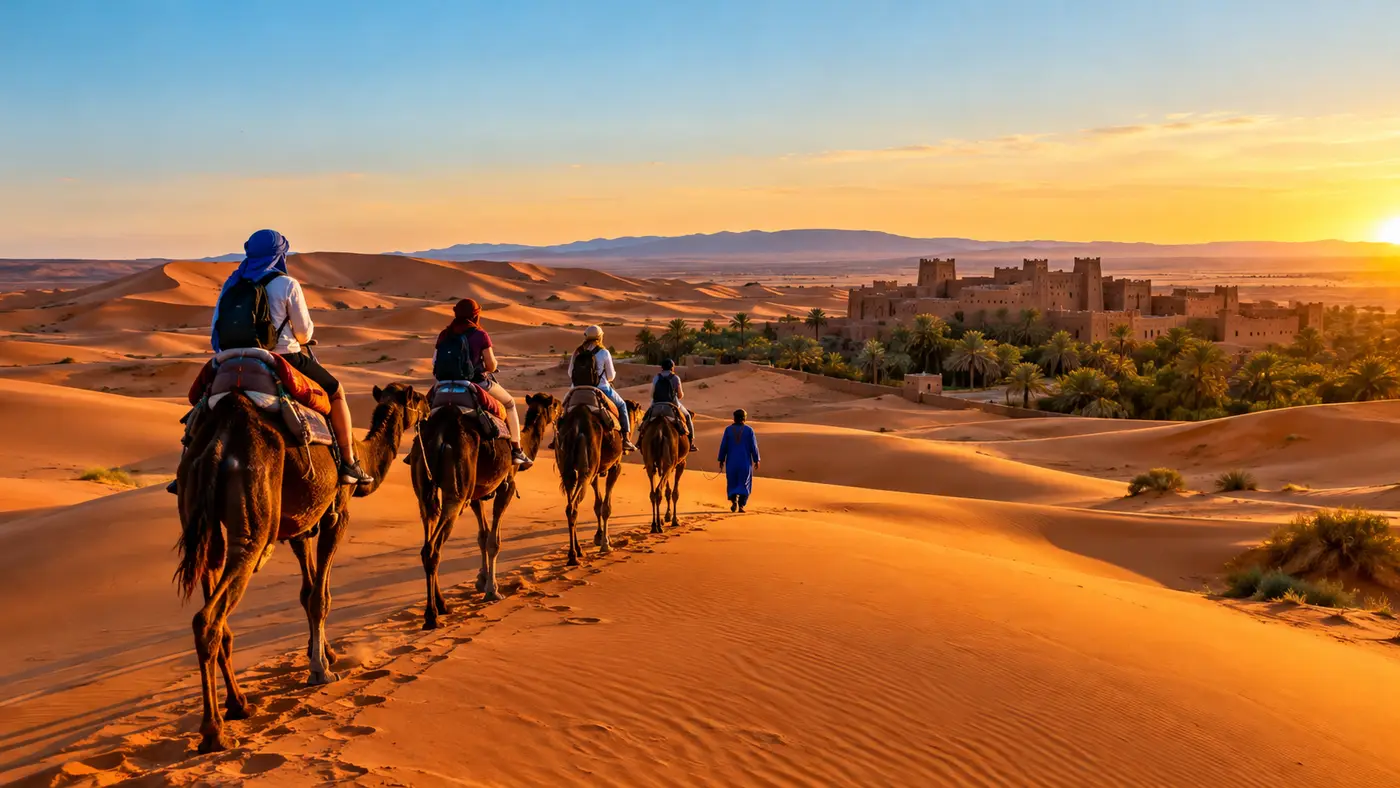
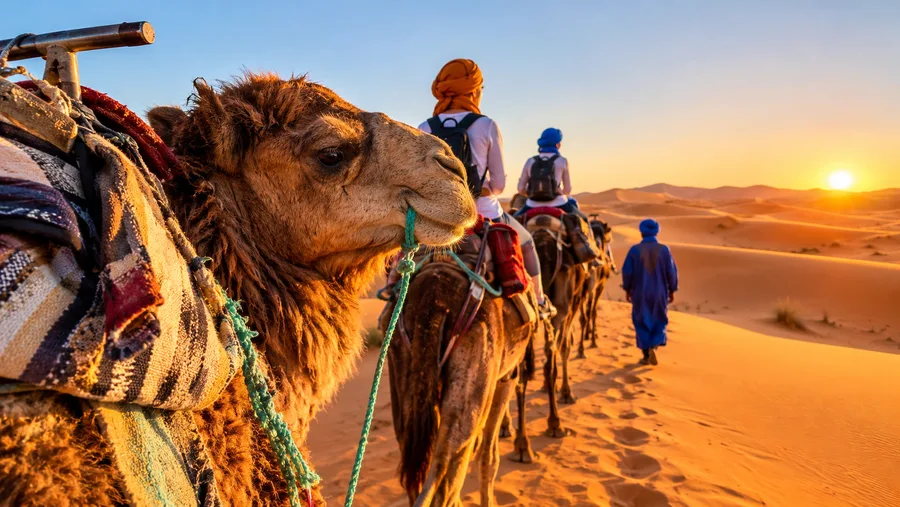
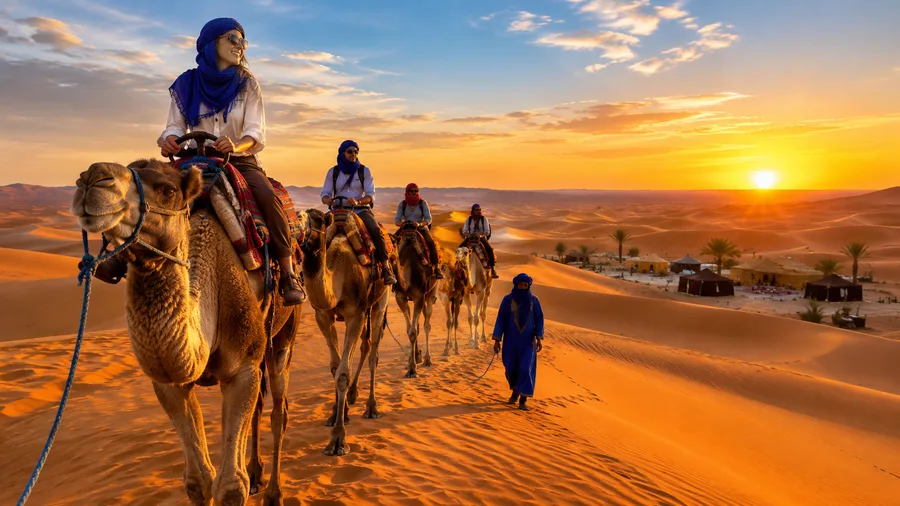
By four in the afternoon, the horizon starts glowing gold. The dunes of Erg Chebbi emerge abruptly out of the flat black gravel plain, some climbing up to 150 meters high. This is the moment where the 3 day marrakech to fes sahara desert tour via merzouga really pays off. You leave your main luggage in the transport, take a small overnight backpack, and mount a dromedary for an hour-long trek across the ridges toward camp. Riding a camel is awkward for the first ten minutes, but rocking with the animal across silent ridgelines as long shadows stretch across the orange sand makes every bump worthwhile.
Note: Winter nights in the Merzouga desert drop down near freezing between December and February, so bring thermal layers even if the daytime heat reached 25 degrees Celsius.
The desert camp itself ranges from rustic wool-fabric tents to high-end glamping setups with heated duvets and private ceramic toilets. Dinner is usually a chicken tagine simmered with preserved lemons and olives, eaten communally under woven wool carpets. Afterward, camp staff kindle a tamarisk wood fire and play traditional gnawa rhythm songs on metal castanets and hide drums. Looking up, the absence of light pollution reveals the Milky Way spilled across the sky like silver dust.
Book your sahara desert tours experience:
Day 3: The Long Push to Fes Through the Middle Atlas
Day three is the longest haul of any sahara desert tours from marrakech to fes, covering roughly 470 kilometers over eight to nine hours of road time. Setting an alarm before dawn is non-negotiable if you want to watch the sun rise over the Algerian border. The sand turns pale pink, then deep copper, before blinding morning light washes out the dune shadows. After a quick breakfast, you ride camels or take a four-wheel drive vehicle back to the asphalt road in Merzouga to meet your driver.
The journey northward begins through the spectacular Ziz Valley. Millions of date palms fill the bottom of this deep river canyon, creating a ribbon of dark green cutting through pale stone cliffs. It is one of the most photographed views in the south. You pull over at high scenic overlooks where young boys sell palm-leaf woven camels and desert minerals for pocket money.
Midelt sits halfway, nestled on a high plateau between the Middle and High Atlas ranges. It is an unglamorous apple-farming town, but every tour bus stops here because there is nowhere else to eat for sixty miles in either direction. The food here is basic - grilled skewers of spiced lamb, vegetable tagine, and peeled oranges sprinkled with cinnamon.
After lunch, the scenery turns green. You enter the cedar forests near Azrou. If your driver stops near the forest edge, you will encounter troops of Barbary macaques living in the trees. They are accustomed to tour groups and will brazenly beg for peanuts or fruit, though keeping a cautious distance is wise since they remain wild animals. A few miles further lies Ifrane, built by French authorities during the 1930s to resemble a Swiss ski resort, complete with steeply pitched red roofs, manicured gardens, and a clean stone lion monument. By dusk, the mountain roads descend into the ancient valley of Fes, dropping you off near the blue gate of the medina.
| Day | Route Segment | Distance | Drive Time | Key Sights |
|---|---|---|---|---|
| Day 1 | Marrakech to Dades Valley | 315 km | 6 - 7 hours | Tizi n'Tichka Pass, Ait Benhaddou, Ouarzazate |
| Day 2 | Dades to Erg Chebbi (Merzouga) | 250 km | 4 - 5 hours | Todra Gorge, Erfoud, Camel trek, Desert camp |
| Day 3 | Merzouga to Fes | 470 km | 8 - 9 hours | Ziz Gorge, Midelt, Azrou Cedar Forest, Ifrane |
Choosing Between Shared and Private Desert Tours
When booking a 3 day sahara desert tour from marrakech to fes, the fundamental choice comes down to shared minibuses versus private transport. The shared version costs far less, often around 95 to 140 euros per person including two nights of accommodation, transportation, and dinners. However, shared tours pack up to fifteen strangers into a Toyota Coaster or Mercedes Sprinter. Legroom is tight, bathroom breaks are strictly regimented, and you are trapped with whatever music or complaints your seatmates offer for three full days.
A private tour costs significantly more, starting around 350 to 550 euros per vehicle depending on party size and the quality of your desert camp. The benefits are obvious. You can tell your driver to pull over whenever you see an interesting viewpoint, spend an extra hour climbing Ait Benhaddou, or skip tourist shops altogether. Private tours also use comfortable four-wheel drive Toyota Prados or Land Cruisers, which handle mountain corners far better than heavy vans.
If you have the budget, booking a private trip or stepping up to a luxury camp makes an enormous difference in how rested you feel when you finally reach Fes. Upgraded desert camps provide real beds, solar power for charging cameras, and hot-water showers right inside your tent, eliminating the dusty discomfort of shared public washrooms.
What to Pack for Three Days on the Road
- Warm nightwear: fleece sweater and thermal leggings, because sand radiates heat away immediately after sunset.
- Small overnight bag: a 20-liter daypack for your camel trek, leaving large rolling suitcases stashed securely in the driver's vehicle trunk.
- Cash in small denominations: 20, 50, and 100 dirham notes for roadside bathrooms, lunch stops, local guide tips, and bottled water.
- Scarf or cheche: a traditional cotton Berber scarf protects your face and ears from blowing sand far better than any baseball cap.
- Stomach remedies: charcoal tablets, electrolytes, and motion sickness medicine for the endless mountain hairpins.
Key Differences: Shared vs. Private Options
- Pacing flexibility: private trips leave when you want and stop anywhere; shared groups stick to a rigid commercial timetable.
- Comfort level: 4WD vehicles have softer suspension than budget commercial minibuses crammed to capacity.
- Camp conditions: budget shared tours use basic shared wool tents with cold bucket showers; private trips typically include upgraded desert camps.
- Luggage safety: private vehicles keep your bags locked under your own supervision rather than stacked alongside strangers' packs.
Frequently Asked Questions about sahara desert tour from marrakech to fes
Is three days enough time to travel from Marrakech to Fes via the desert?
Yes, three days is the standard minimum timeframe for this route. It involves heavy driving, especially on day three which takes around nine hours, but it remains the most practical way to see the dunes without adding extra days to your holiday.
Can you do the sahara desert tour from fes to marrakech instead?
Absolutely. The route works in reverse with the exact same stops. Many travelers book the tour from Fes to Marrakech if their international flights enter Morocco through Fes or Casablanca and depart from Marrakech.
Are the desert camps cold at night?
From late October through early April, desert night temperatures drop dramatically, often falling between 2 and 7 degrees Celsius. Even in warmer months, the sudden drop after sunset can make the air feel surprisingly crisp, so packing warm layers is essential.
What happens to my main luggage during the camel ride?
Your large suitcases or backpacks stay securely locked inside your tour vehicle or at the staging hotel in Merzouga. You only carry a small daypack containing overnight essentials, electronics, and a change of clothes on the camel trek to camp.
Quick Reference
- Total distance: roughly 1,035 km
- Drive time on day three: 8 to 9 hours
- Highest point: Tizi n'Tichka pass (2,260 m)
- Desert location: Erg Chebbi dunes near Merzouga
Book your sahara desert tours experience:
My Take
Spending twenty hours sitting in a vehicle across three days might sound exhausting, and honestly, the long drive on day three tests everyone's patience. Yet almost every traveler I talk to counts this specific crossing as the undisputed highlight of their Moroccan trip. Stepping out onto the silent ridge of Erg Chebbi as the evening light paints the Sahara in deep shades of apricot makes every bumpy kilometer across the Atlas completely worth the effort. Book a tour with a verified driver, pack warm socks, and take the journey slowly.
Read more about sahara desert tours.